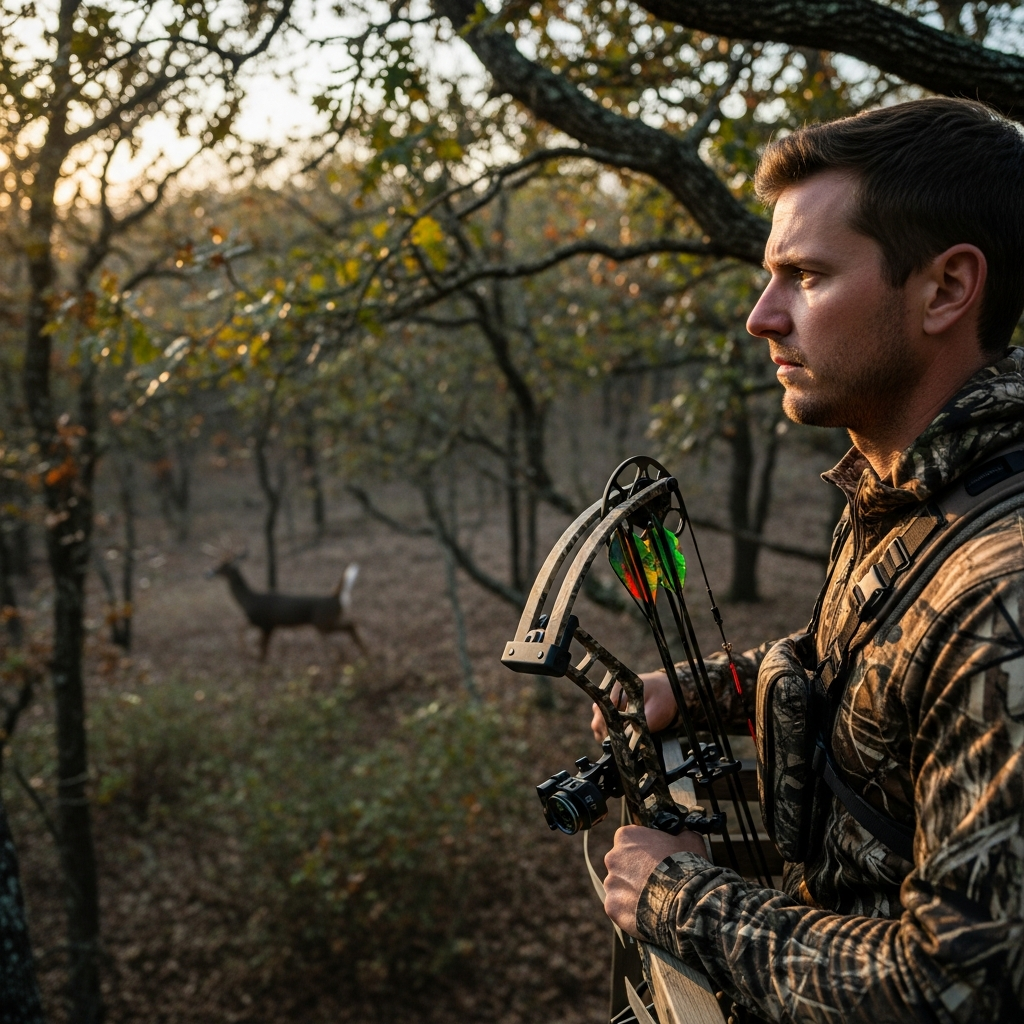
Did he kick?
Did he hunch his back?
Was his tail up or tucked?
Did he run hard, stumble, or slowly walk away?
For a first-time hunter, those few seconds after the shot can feel like a blur. But what the deer does immediately after impact can give you some of the first important clues about where your arrow or bullet may have landed.
I said may for a reason.
A deer's reaction is helpful, but it is not proof. Deer do not all react the same way, even when they are hit in nearly the same place. One deer may mule kick after a lung hit. Another may simply run. A gut-shot deer may hunch up, but so can a startled deer that was grazed or hit somewhere else.
The smartest thing you can do is treat the deer's reaction as one piece of the recovery puzzle.
Combine it with:
- Where you believe the shot landed
- The angle of the deer
- The sound of the impact
- What you find on the arrow
- Hair at the impact site
- The first blood you locate
- The direction the deer traveled
The more clues you have, the better your recovery decision will be.
Before You Climb Down, Sit Still
This may be the hardest advice in this entire article.
Do not immediately climb down and run to where the deer was standing.
I know what you are feeling. You want to know whether you hit him. You want to find blood. You want to see your arrow. You want to begin tracking before the daylight disappears.
Slow down.
Stay in your stand or blind for a few minutes and replay the shot in your mind while the memory is still fresh.
Ask yourself:
- Was the deer broadside, quartering away, quartering toward me, or facing me?
- Where was my sight pin when the shot broke?
- Did the deer move before the arrow arrived?
- Did I hear a solid impact?
- Which direction did he leave?
- Did he cross a trail, creek, fence, road, or opening?
- What did his body do at the moment of impact?
- What did his tail do as he ran?
Pick out a tree, stump, patch of grass, palmetto, or other landmark where the deer was standing. Then choose another landmark where you last saw him. Do not trust yourself to remember the exact spot after you climb down. The woods can look completely different from the ground than they did from fifteen or twenty feet up.
What Does a Mule Kick Mean?
The mule kick is probably the most talked-about reaction in deer hunting.
A mule kick happens when a deer throws its rear legs high into the air, almost like a horse kicking backward.
Many hunters associate this reaction with a heart or lung hit. Sometimes that is exactly what it means.
A deer hit through the chest may kick hard, bolt forward, and run low to the ground. If the arrow passed through both lungs or the heart area, the deer may not travel far.
But do not make the mistake of believing every mule kick guarantees a perfect hit. A deer may kick because of surprise, pain, or the sudden impact of the arrow. Some deer kick after being hit farther back. Others kick after a nonfatal hit.
Think of the mule kick as encouraging evidence, not a recovery guarantee.
If you saw a mule kick, also ask:
- Did the deer run hard and low?
- Did the front end seem weak?
- Did the deer begin stumbling?
- Was the tail tucked?
- Did you hear the deer crash shortly afterward?
- Does the arrow show pink or red blood?
When several of those signs appear together, your confidence in a chest hit becomes stronger.
The Hunched-Back Reaction
A deer that hunches its back after the shot often looks sick.
Its back may arch upward. Its head may drop. It may take short, stiff steps instead of running normally. Some hunters say the deer looks like it is trying to make itself smaller.
This reaction is commonly associated with a liver, stomach, or intestinal hit.
A deer hit through the digestive system may not immediately run as hard as a lung-shot deer. It may trot away, stop, stand with its head low, or slowly walk into cover.
This is one of the most important times to control your excitement.
A deer with a liver or gut hit is often recoverable, but only if you give it enough time. If you climb down too soon and push that deer from its first bed, you may turn a manageable recovery into an all-night or all-morning search.
If the deer hunches up and walks away slowly, do not treat that as a weak hit that requires immediate pursuit. Quite often, the opposite is true. That deer may be badly hurt and looking for the first safe place to bed down.
Back out, study the evidence, and be prepared to wait.
Running Low to the Ground
A deer that runs with its body low and stretched forward may have been hit through the chest.
You may see the front legs reaching, the head extended, and the deer driving hard through the woods. Sometimes the animal appears to be running downhill even on level ground.
This reaction can happen when breathing or circulation is quickly affected. A good heart or double-lung hit may cause the deer to run hard for a short distance before losing strength.
However, excitement alone can also make a deer run low and fast. That is why you still need the arrow, hair, blood, and shot location before deciding how soon to follow.
Do not assume that a hard-running deer was missed just because it did not immediately fall. A deer can cover a surprising amount of ground in only a few seconds.
The Front End Drops or the Deer Stumbles
When a deer's front end drops, buckles, or appears weak immediately after the shot, the hit may have affected the shoulder, spine, chest, or major blood vessels. Sometimes a deer will stumble, nearly fall, regain its feet, and continue running.
This can look like a devastating hit.
Be careful.
A high shoulder or spinal shock can temporarily knock a deer down without causing a fatal wound. A deer may collapse, recover, and leave before the hunter reaches it.
This is especially important for firearm hunters. A buck that drops instantly is not always dead. Keep your weapon ready. Watch the deer carefully. If the deer is still moving, breathing, holding its head up, or trying to rise, be prepared for a safe and ethical follow-up shot when one is available.
For bowhunters, a hit that appears to break or heavily damage the front shoulder may leave poor penetration. You may find bone fragments, coarse hair, or limited blood.
A stumbling deer gives you information, but it does not remove the need for caution.
The Back Legs Kick, Drop, or Stop Working
A hit near the spine, pelvis, or rear leg can cause the back end to drop.
The deer may:
- Sit down suddenly
- Drag one or both rear legs
- Fall and get back up
- Run with an uneven hopping motion
- Swing its back end from side to side
This does not automatically mean the deer is mortally wounded.
A deer with a leg or low pelvic hit can travel a long distance, especially after being pressured. The blood may look impressive at first because a muscle wound can bleed heavily, then slow down.
If the rear legs are clearly not working properly, watch the deer for as long as possible and mark the exact direction of travel. Do not assume a large amount of bright blood means a heart hit. Muscle wounds can produce bright red blood too.
The Tail Is Tucked Down
A deer running with its tail tightly tucked may be badly hurt, frightened, or focused on escaping.
Many hunters feel better when they see a tucked tail because it can accompany a good hit. It may.
A deer hit through the lungs or heart sometimes runs with its tail down and body low. But a tucked tail alone is not enough to identify the hit.
Pay attention to how tightly the tail was held, whether the deer was stumbling, and whether its running style changed.
A tucked tail becomes more meaningful when it is combined with other good signs.
The Tail Is Raised High
A raised white tail is often seen when a deer is alarmed and fleeing danger. Some hunters see a flagging tail and immediately believe they missed. That is not always true.
A wounded deer can still raise its tail. A deer's tail position is influenced by alarm, communication, terrain, and individual behavior.
A high tail may make a clean miss more possible, especially if the deer bounded away normally and showed no sign of impact. But do not make that decision until you inspect the impact site and arrow.
Plenty of hunters have watched a deer flag its tail and later recovered it.
The Tail Flicks or Twitches
A quick tail flick immediately after the shot can mean the deer felt something, but it is not enough to identify where the animal was hit.
Sometimes a deer will twitch its tail, clamp it down, and leave slowly. Other times it flicks its tail and bolts.
Treat a tail flick as a small clue. Do not let it outweigh stronger evidence such as blood color, hair, arrow condition, or the location where you saw the arrow enter.
The Deer Walks Away Instead of Running
A deer that slowly walks away after the shot can make a hunter think the arrow missed.
Do not be too sure.
A deer hit in the liver, stomach, or intestines may walk away stiffly with its head low. It may stop after twenty or thirty yards and stand motionless. It may look back, wobble, or disappear slowly into cover. That deer may be in serious trouble.
A deer that simply heard the bow or was startled may also walk away while trying to understand what happened.
The difference often appears in its posture.
Watch for:
- An arched or hunched back
- A low head
- Stiff-legged movement
- A tucked tail
- Pausing in cover
- Standing with legs spread
- Repeatedly looking toward its side
- Slow, uncomfortable steps
If the deer acts sick, believe what you are seeing and give it time.
The Deer Stops and Looks Back
Some deer run a short distance and stop to look toward the hunter. This can happen after a miss, a minor hit, or a serious hit.
A deer may not understand where the danger came from. It may stop behind cover and look back, even while badly wounded.
Do not move. Do not climb down. Do not wave your arms trying to scare it away. Remain still and watch.
If the deer begins to wobble, lower its head, spread its legs, or bed down, remember the exact location.
A wounded deer that stops nearby may still be within range for a safe follow-up shot. Whether you should take one depends on visibility, angle, your confidence, and whether you can make the shot safely and ethically.
The Deer Beds Down Quickly
Seeing the deer bed within sight can be a very useful clue. It can also create one of the biggest temptations in hunting.
The hunter thinks: "He is right there. I can go get him."
Do not rush.
A deer that beds down quickly may be weak, but it may still have enough strength to get up and travel a long distance if approached. Watch it carefully.
If the deer is still upright, moving its ears, raising its head, or looking around, it is still alive and aware. Remain quiet. Give the animal time. If you lose sight of the bed, mark that location precisely.
If you must leave and return later, approach carefully from a direction that keeps the wind and terrain in your favor.
The Deer Runs Toward Water
Hunters often say wounded deer always head toward water. Sometimes they do. But not every deer does, and water is not a magical rule.
A wounded deer may follow familiar escape routes, travel downhill, enter thick cover, cross water, or head toward bedding areas. In hot weather, a badly wounded animal may end up near water, but terrain and habit usually influence the route.
Do not ignore creeks, ponds, drainage ditches, swamps, and low ground during a recovery. Just do not assume the deer must be there. Follow the actual evidence instead of hunting based only on old sayings.
The Deer Runs Downhill
A wounded deer may choose the easiest path, and downhill travel requires less effort than climbing. That makes slopes, drains, creek bottoms, and low areas worth checking when the blood becomes difficult to follow.
However, deer also run uphill after being shot. Their first movement is often based on escape instinct, familiar trails, cover, and the direction they were already facing.
Use downhill travel as a possibility, not a rule.
Listen After the Deer Disappears
Your eyes are not the only tool you have. Listen.
You may hear:
- The deer running through leaves
- A fence being crossed
- Branches breaking
- Water splashing
- A heavy crash
- A final thrashing sound
A crash can be encouraging, but make sure you know what you heard. A deer running through thick palmettos, brush, or dead limbs can make a tremendous racket without falling.
Stay quiet for several minutes after the deer disappears. You may hear movement that tells you whether it continued traveling or stopped nearby. Mark the direction of the last sound.
What Does the Sound of the Hit Mean?
Hunters often describe different impact sounds.
A solid chest hit may make a heavy, hollow thump. A shoulder or bone hit can sound sharp and hard. A gut hit may sound softer. A miss may produce the sound of the arrow striking dirt, leaves, or wood.
These sounds can help, but they are easy to misinterpret — especially when your adrenaline is high. Distance, wind, terrain, leaves, clothing, and the deer's body angle can all change what you hear. Use the impact sound as supporting evidence only.
Do Not Chase a Deer Based on Its Reaction Alone
This is where many recoveries go wrong.
A hunter sees what looks like a perfect mule kick and immediately begins tracking. Another hunter sees the deer walk away and assumes it was a miss. Both may be making a mistake.
The deer's reaction should guide your investigation, not end it.
When you reach the impact site, examine:
- The arrow
- Blood color and consistency
- Hair length and color
- Fat or tissue
- Stomach material
- Bone fragments
- Tracks and disturbed leaves
- The deer's direction of travel
Then match those clues with what you saw after the shot.
A Simple Example
Imagine you shoot a broadside buck.
At impact, he kicks his rear legs high, lowers his body, and runs hard with his tail tucked. You hear him crash after about seventy yards. You find an arrow covered in pinkish blood with small bubbles.
Those clues fit together well. The shot looked like a chest hit. The deer reacted like a chest-hit deer. The arrow shows possible lung blood. The crash came from the direction of travel. That is a strong recovery picture.
Now imagine a different shot.
The deer hunches its back, walks twenty yards, stops with its head low, and slowly disappears. The arrow smells foul and has green material on it. Those clues point in a different direction. That is not the time to begin tracking quickly. That is the time to back out and give the deer several hours.
The reaction matters most when it agrees with the physical evidence.
How Long Should You Wait?
There is no single wait time that fits every deer.
A strong heart or double-lung hit may allow a relatively short wait. A suspected liver hit usually requires more patience. A suspected stomach or intestinal hit may require several hours or an overnight wait, depending on the circumstances.
Weather, temperature, predators, property lines, and legal shooting hours may affect your decision, but none of those concerns change what happens when a wounded deer is pushed too soon.
When you are uncertain, patience is usually safer than pressure.
For a more detailed breakdown, read HuntIQ's guide on how long you should wait after shooting a deer before beginning the blood trail.
Do Not Forget the Shot Angle
A deer's reaction cannot tell you everything because the same entry point may produce very different internal damage depending on the angle.
A quartering-away arrow may enter behind the ribs and travel forward through both lungs. A quartering-toward arrow may strike the shoulder, one lung, or heavy bone. A high stand angle may create a high entrance and low exit.
That is why you should always think about the path of the arrow through the deer, not just the spot where it entered.
The HuntIQ Deer Shot Placement Guide explains how broadside, quartering-away, quartering-toward, frontal, and elevated angles affect the organs an arrow may reach.
When You Are Not Sure What You Saw
Sometimes the honest answer is: "I do not know."
That is all right.
Adrenaline can play tricks on your memory. A deer may turn at the shot. A branch may block your view. Low light can make the impact location hard to judge.
Do not invent a perfect shot in your mind because that is what you hoped happened. Work with the evidence you actually have.
Mark the impact site. Find the arrow. Examine the hair and blood. Look at the first several yards of the trail. Then make your recovery decision.
If you are unsure what you found on the arrow, Reading Your Arrow walks through exactly what blood color, hair, fat, and smell can tell you before you take a single step.
Using HuntIQ After the Shot
Put the Clues Together With HuntIQ
HuntIQ's Shot Analyzer lets you identify the hit location and compare it with the reaction you observed. It provides recovery guidance, estimated wait time, and information about what you may find on the trail — without replacing your judgment or a tracking dog when one is needed. Once you start tracking, Trail Maker marks your path and Blood Tracker helps highlight small droplets against leaves and debris.
Try HuntIQ Free for 5 DaysThe Most Important Lesson for a New Hunter
Do not let excitement make the decision for you.
A hunter who waits when he should wait will recover more deer than a hunter who charges into the woods after every shot.
Watch the reaction. Remember the direction. Study the arrow. Read the blood. Think about the angle. Then make a plan.
The deer's first few steps after the shot may tell you a great deal, but they rarely tell you everything. Good recovery work comes from putting all the clues together.
And sometimes the smartest step you can take after the shot is no step at all.
Keep Learning
The deer's reaction is just one piece of the recovery picture. These guides cover the rest.
- Reading Your Arrow: What Blood, Hair, Fat, and Other Clues Can Tell You After the Shot — Before you take a step, your arrow is already telling you where you hit the deer. Learn how to read every clue it carries.
- Blood Tracking Deer: The Complete Guide to Following a Blood Trail After the Shot — A full walkthrough of blood colors, trail patterns, and what to do when the blood runs out.
- How Long Should You Wait After Shooting a Deer? — Detailed wait time guidance by hit location, temperature, and circumstances.
- Deer Shot Placement Guide: Understanding Angles, Anatomy and Recovery — Know where the arrow needs to go before the shot so you can match the reaction after.