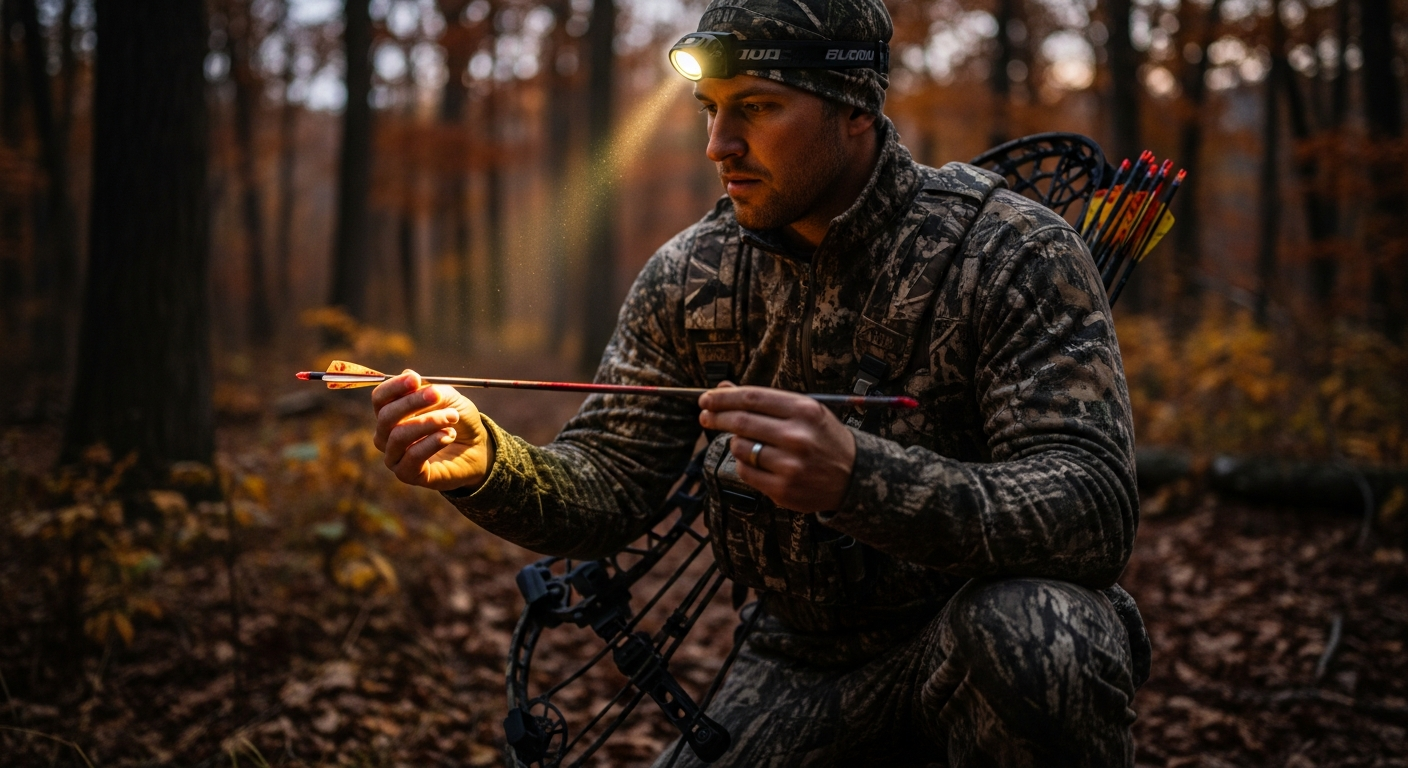
I've watched hunters pick up an arrow, wipe it clean on their pants, and immediately start tracking because they were too excited to stop and think. Sometimes they recover their deer. Sometimes they don't. More often than not, they end up pushing a wounded deer farther than they ever should have.
Before you take another step, slow down.
Take a deep breath.
Look at your arrow.
It may already be telling you exactly what happened.
First Things First—Don't Rush
After the shot, your heart is probably pounding. Mine still does after all these years.
You replay the shot over and over in your mind.
"Did I hit him too far back?"
"Was that lower than I thought?"
"Did he mule kick or just jump the string?"
All those questions matter, but before you answer them, spend a minute studying your arrow.
Try not to wipe anything off.
Hold it up where the light is good. If it's getting dark, use a flashlight or even your phone. Look carefully at everything on it — not just the blood.
The color.
The thickness.
Hair.
Fat.
Any smell.
All of those clues fit together like pieces of a puzzle.
Bright Red Blood
Seeing bright red blood is usually a good sign.
If it's clean, fresh-looking blood without much else on the arrow, chances are you've passed through muscle or a well-placed vital area. Depending on exactly where the deer was hit, you may be looking at a heart shot or another highly lethal hit.
That doesn't mean you should immediately sprint after the deer.
Even a perfectly hit deer can run a surprising distance on pure adrenaline.
Give yourself a few minutes to calm down and replay the shot before climbing out of your stand.
Dark Red Blood
Dark red blood often makes hunters nervous.
It should.
Dark, rich blood frequently points toward the liver.
A liver-shot deer is almost always recoverable if you have patience.
The mistake many hunters make is assuming the deer is already dead and taking up the trail too soon.
A liver-hit deer will often bed down within a couple hundred yards. If you push him out of that first bed, you've just made your recovery much harder.
Patience kills more recovered deer than speed ever will.
Pink, Frothy Blood
If your arrow is covered with bright pink blood that has tiny bubbles mixed into it, take a deep breath.
That's one of the better signs a bowhunter can hope to see.
Those little bubbles come from air escaping the lungs.
When your broadhead passes through lung tissue, blood and air mix together, creating that frothy appearance.
Many double-lung deer won't travel very far.
That doesn't mean you should immediately charge after them.
Give them a little time.
You'll often be rewarded with a short, easy recovery.
Green or Brown Material
Nobody likes seeing green material on an arrow.
It usually means stomach contents.
Sometimes it's green. Sometimes brown. Sometimes it has bits of partially digested food.
And yes...
You'll usually smell it before you see it.
If your arrow smells sour, rotten, or like something that definitely shouldn't be inside a healthy animal, there's a good chance you've hit the stomach or intestines.
This is where patience becomes your greatest weapon.
A gut-shot deer can live for several hours.
Push him too soon, and he may travel another half mile.
Give him plenty of time, and many times he'll bed down and never leave that spot.
White, Yellow, or Greasy Fat
Sometimes you'll notice greasy-looking material on the arrow.
That's fat.
Depending on where it came from, it may be white or slightly yellow.
Fat alone doesn't tell you much.
It simply tells you your broadhead passed through fatty tissue before reaching — or missing — vital organs.
This is where you need to combine what you saw on the arrow with what you remember about the shot.
One clue rarely tells the whole story.
Several clues together usually do.
Hair Can Tell a Story Too
A surprising number of hunters never even look at the hair stuck to their arrow.
They should.
Hair can tell you a lot about where your arrow entered the deer.
- Long white hair often comes from the belly.
- Short brown hair usually comes from the sides.
- Long, hollow guard hairs often come from the back or upper body.
- Black hair may come from the brisket, neck, or darker portions of the hide, depending on the deer.
Don't rely on hair alone, but don't ignore it either.
It's another clue that helps complete the picture.
For a deeper look at what different types of hair can tell you — and how to read them alongside blood and tracks — take a look at the Blood Tracking Deer: The Complete Guide.
Don't Forget to Smell the Arrow
This might sound strange if you've never done it before.
Go ahead.
Smell it.
Fresh blood usually doesn't have much odor.
Stomach contents often smell awful.
Liver blood can sometimes have a different metallic scent than fresh muscle blood.
Experienced hunters have learned over time that your nose can tell you almost as much as your eyes.
It isn't foolproof.
But it's another piece of evidence.
Can an Arrow Fool You?
Absolutely.
I've seen arrows pass through one part of a deer and pick up blood from another. I've seen branches knock arrows off course. I've seen pass-throughs that looked terrible on the arrow but ended in a clean recovery. I've also seen arrows that looked almost perfect while the actual hit wasn't.
That's why you never make decisions based on one clue alone.
Instead, ask yourself:
- Where did I think I hit him?
- How did he react?
- What did his tail do?
- How did he run away?
- What does my arrow show?
- What kind of blood did I find at the impact site?
The more clues you put together, the clearer the picture becomes.
If you want to understand what shot placement tells you before you even find your arrow, the Deer Shot Placement Guide is worth reading before your next hunt.
The Biggest Mistake New Hunters Make
They get excited.
Believe me...
We've all been there.
The shot feels good. The deer runs away. You climb down too quickly. You start tracking immediately. Then suddenly the blood disappears. Now you're wondering what went wrong.
Many recoveries are lost not because of poor shooting, but because of poor decisions after the shot.
Patience is one of the greatest skills a hunter can develop.
Sometimes doing nothing for an hour is the smartest thing you'll do all season.
Not sure how long to wait for your specific hit? How Long Should You Wait After Shooting a Deer? covers the most common situations in detail.
Every Deer Is Different
If there's one lesson hunting has taught me over the years, it's this:
No two recoveries are exactly alike.
Two deer can be hit in nearly the same spot and behave completely differently.
That's why no article — including this one — can guarantee exactly what happened.
Your arrow simply gives you your first clues.
The deer still has the final say.
Using HuntIQ to Help Put the Pieces Together
Sometimes your arrow tells a clear story.
Sometimes it leaves you scratching your head.
That's one reason HuntIQ includes tools designed specifically for deer recovery.
The Shot Analyzer helps you compare where you believe the deer was hit with how the deer reacted after the shot, giving you a better idea of what to expect before you ever start tracking.
And if your blood trail becomes difficult to follow, HuntIQ's Blood Tracker can often help reveal tiny droplets of blood that are easy to miss against leaves, pine needles, or forest debris. It isn't magic, and no tool is perfect, but it can provide another set of eyes when every drop matters.
HuntIQ's Recovery Tools
The Shot Analyzer and Blood Tracker are built to help you make smarter decisions after the shot — not replace the experience you build in the field.
Try HuntIQ Free for 5 DaysFinal Thoughts
Every hunter remembers their first deer.
Most of us also remember the first one we almost lost.
If there's one piece of advice I'd leave you with, it's this:
Slow down.
That arrow is trying to tell you a story.
Study it. Think about it. Match what you see on the arrow with what you witnessed after the shot.
The few extra minutes you spend reading those clues may be the difference between finding your deer quickly or spending the rest of the evening wondering where he went.
Good hunters don't just shoot well.
They recover well.
And recovery starts with understanding the very first clue lying on the ground at your feet.
Keep Learning
Your arrow is only the beginning. Once you've read every clue it offers, the trail itself takes over. These articles can help you carry what you learned from your arrow all the way to your deer:
- Blood Tracking Deer: The Complete Guide to Following a Blood Trail After the Shot — How to read blood color, hair, bone, and behavior from the first drop all the way to the deer.
- Deer Shot Placement Guide — Understanding where your arrow entered the deer helps you predict what the blood trail will look like before you start following it.
- How Long Should You Wait After Shooting a Deer? — Once you've read your arrow, this guide helps you decide exactly when to start the track.