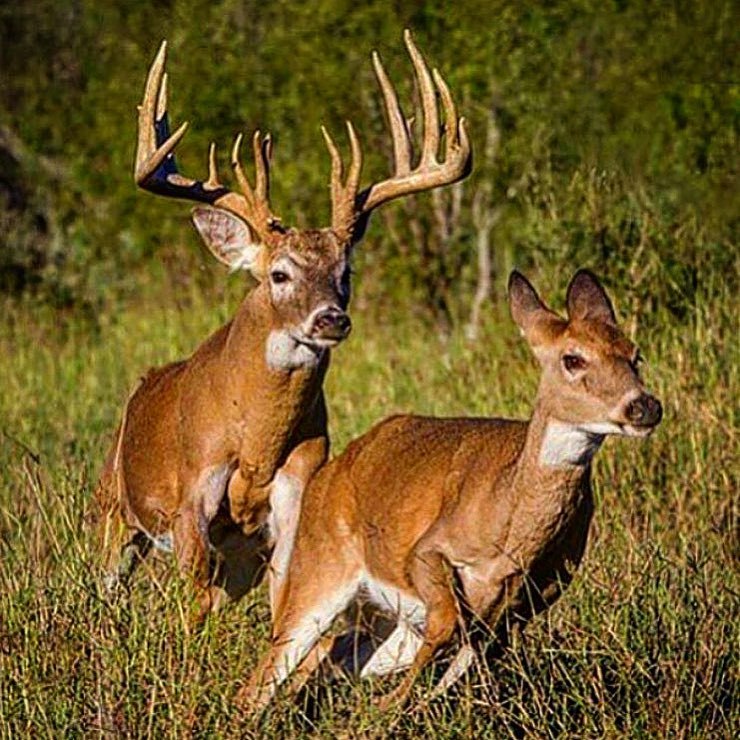
But here's something I've learned over the years. Just because somebody says the rut is on doesn't mean every buck in the woods is doing the same thing. There's the pre-rut, the seeking and chasing stage, the peak breeding period, and the post-rut. Every one of those stages brings different deer behavior, and every one calls for a different hunting strategy. The fellow who understands those changes has a whole lot better chance than the one who just climbs into the same stand every morning and hopes something happens.
And don't get fooled by somebody telling you the rut starts on one particular date everywhere. Up north, most breeding happens during a fairly predictable fall period. But down South, especially in places like Texas, Mississippi, Alabama, Georgia, and Florida, breeding dates can vary considerably from one area to another. The shortening of daylight helps control the breeding cycle, but local deer populations don't all follow the same calendar. Your best guide is knowing when deer actually breed where you're hunting, not what somebody halfway across the country posts on Facebook.
THE PRE-RUT: WHEN THE BUCKS START GETTING RESTLESS
The pre-rut is when those bucks start acting like something important is fixing to happen, but they ain't quite ready to throw caution to the wind just yet. Their testosterone levels are rising, their necks are getting thicker, and those bachelor groups from summer have generally started breaking apart. Bucks begin rubbing trees, working scrapes, checking scent, and establishing their place among the other bucks in the area.
You'll notice fresh rubs along travel routes and scrapes underneath overhanging branches. A buck may visit a scrape to leave scent and gather information about other deer using that area. But don't make the mistake of thinking every scrape you find is a guaranteed place to kill a deer. Some scrapes get worked mostly at night, and a big buck can have several of them scattered around his territory.
During the pre-rut, mature bucks are often still following somewhat predictable feeding and bedding patterns. They may be moving a little farther and checking on does, but they haven't completely abandoned their normal routines. That's important because this can be one of your better opportunities to hunt a particular buck you've already located.
HOW TO HUNT THE PRE-RUT
I'd concentrate on the trails connecting bedding cover to dependable food sources, especially where you find fresh rubs and scrapes along the way. If you've got trail cameras showing a good buck using a particular route, pay attention to the wind direction, his travel time, and where he seems to be coming from.
A stand along the downwind side of a travel corridor can be mighty productive, provided you can reach it without letting every deer in the woods know you're there. Look for inside corners, narrow strips of timber, creek crossings, and natural funnels that concentrate deer movement.
This can also be a good time for occasional soft grunts or light rattling, especially where bucks are already showing competitive behavior. But don't go banging antlers together every fifteen minutes just because you saw somebody do it on television. Sometimes the smartest thing a hunter can do is sit still, watch, and let a buck follow his normal route.
THE SEEKING AND CHASING STAGE: WHEN THE WOODS COME ALIVE
Now we're getting to the part of the rut that makes a hunter forget he's cold, hungry, or been sitting on a hard stand seat for six hours.
As more does approach their breeding period, bucks start covering additional ground searching for one that's ready. You'll see bucks cruising through areas they normally avoid during daylight. Young bucks may start chasing does before those does are willing to breed, and mature bucks can begin appearing in places where nobody's seen them all season.
A doe might come flying through the timber with her tail tucked down, and right behind her comes a buck with his nose nearly dragging the ground. Sometimes there's another buck following him, and occasionally another one behind that. The woods can go from dead quiet to looking like somebody opened the gate at a rodeo.
This is when bucks can become less cautious because they're concentrating so heavily on finding and following does. But don't misunderstand that to mean they've forgotten how to smell you. A mature buck's nose still works just fine, and a careless hunter can ruin an opportunity in a hurry.
HOW TO HUNT THE SEEKING AND CHASING STAGE
If I had to pick one stage when a hunter has a particularly good chance of seeing an unfamiliar mature buck moving in daylight, this would be mighty high on my list.
This is the time to hunt travel funnels between doe bedding areas. Narrow creek bottoms, saddles between ridges, strips of timber between open fields, and crossings where several trails come together can all be excellent places to sit.
Instead of concentrating entirely on where bucks have been feeding, start thinking about where the does spend their time. Those bucks are searching for does, and if you set up where they have to travel to check several groups of does, you've put yourself in a pretty good position.
And here's something else. Don't be so quick to climb down at ten o'clock in the morning. During this stage, bucks may travel at practically any hour of daylight. Some of the best opportunities can happen late in the morning or right around midday, when hunters who believe deer only move at sunrise and sunset have already gone home.
Grunt calls, rattling antlers, and occasional doe bleats can sometimes bring a curious or competitive buck within range. Keep your calling believable and watch the deer's reaction. If he's already coming toward you, there ain't much reason to keep calling and tell him exactly where you're sitting.
One other thing I want y'all to remember. When a doe comes running through your area during the chasing stage, don't immediately assume she's alone. Keep watching the trail behind her. A buck might be seconds behind, or he might be taking his sweet time following her scent.
THE PEAK RUT: WHEN BREEDING TAKES OVER
Now here's where a lot of hunters get confused. They hear the words "peak rut" and figure that's when every big buck in the county ought to be running around in broad daylight.
But peak breeding and peak visible chasing ain't necessarily the same thing.
When a doe enters estrus and is ready to breed, a buck may stay close to her, tending and guarding her while she's receptive. That period can last a day or two, sometimes longer if you include the time he spends with her before and after she's ready. During that time, the buck may spend much of his time in thick cover with that particular doe instead of traveling all over the countryside.
Hunters often call this the lockdown phase.
You can have a woods full of breeding activity and hardly see a mature buck moving past your stand. Meanwhile, the fellow sitting a half mile away might have a buck and doe bedded within sight of him most of the morning.
That doesn't mean the rut has stopped. It means some of those bucks have found what they were looking for.
HOW TO HUNT THE PEAK BREEDING STAGE
This is when I'd start paying even closer attention to doe bedding cover and the secluded places where a buck might stay with a receptive doe.
Thick creek bottoms, brushy draws, overlooked pockets of cover, and protected edges near doe bedding areas can be productive. You don't necessarily want to go stomping right through the middle of a bedding area and run every deer out of the county. Set up on the downwind side where deer can travel in and out naturally.
A buck tending a doe may eventually move when she moves, and once he's finished breeding her, he may start searching for another receptive doe. That means patience can pay off even when the woods seem unusually quiet.
This is also a good time to hunt locations where multiple doe groups live close enough that a traveling buck can check several of them without covering tremendous distances.
If you're hunting a particular buck and he suddenly disappears from your cameras, don't automatically assume somebody killed him or he left the property. He could be spending time with a doe in a little pocket of cover where nobody has a camera.
And remember, not every doe enters estrus on the same day. Breeding activity overlaps, and some bucks will still be searching while others are tending does. That's why a good funnel can remain productive even during peak breeding.
THE POST-RUT: WHEN THE OLD BUCKS NEED TO RECOVER
Once the main breeding period begins winding down, things start changing again.
Those bucks have spent a whole lot of time traveling, fighting, chasing, and sometimes going without nearly as much food as they need. By the time the main rut is over, some of them are worn down and have lost a noticeable amount of body weight.
Their priorities begin shifting back toward food, rest, and staying alive.
A buck that was traveling several miles during the chasing phase may start spending more time near secure bedding cover and dependable food sources. Hunting pressure can make that behavior even more noticeable, especially where deer have learned to avoid open areas during daylight.
But don't think the breeding season shuts off like somebody flipped a light switch. Some does may not have been bred during their first cycle, and younger does may become receptive later. That can create another period of breeding activity, often called the secondary rut.
It usually isn't as widespread or predictable as the primary breeding period, but a hunter who happens to be in the right place when a buck finds a receptive doe can still have a mighty exciting day.
HOW TO HUNT THE POST-RUT
I'd start shifting my attention back toward dependable food sources and the secure cover bucks use for recovery.
Depending on where you're hunting, that might mean standing corn, agricultural fields, hardwood bottoms with remaining acorns, food plots, or native browse. The important thing is finding what the deer are actually eating, not what you think they ought to be eating.
During cold weather, especially farther north, food can become even more important as deer need energy to maintain their bodies. Late-season bucks may begin following more consistent patterns, but they'll often remain cautious after weeks of hunting pressure.
An afternoon stand between good bedding cover and a major food source can be productive. The trick is getting into position without disturbing the deer before they begin moving.
If you've still got trail cameras running, keep watching for bucks returning to familiar feeding patterns. And don't ignore a sudden burst of chasing activity late in the season. A receptive doe can still draw attention from bucks that might otherwise be keeping a low profile.
THE WEATHER, THE WIND, AND THE MOON
I've listened to hunters argue about the moon and the weather for more years than I care to count. One fellow swears a full moon ruins his hunting. Another fellow won't leave the house unless the temperature drops twenty degrees.
Here's what I believe. The breeding season follows biological patterns that aren't going to change just because a hunter doesn't like the weather forecast. But temperature, wind, precipitation, and hunting pressure can affect when and where deer move, especially during daylight.
A cold front can make hunting more comfortable and sometimes coincide with increased visible movement, but it doesn't magically start the rut. Likewise, a warm day doesn't mean all the bucks have stopped searching for does.
And as far as I'm concerned, the wind matters more to your stand location than any moon chart somebody's trying to sell you. A perfect rut funnel ain't worth much if your scent is blowing straight into the bedding area.
DON'T LET YOUR TRAIL CAMERA FOOL YOU
Here's another lesson a lot of folks learn the hard way.
You might have a big buck showing up on your camera every night during the pre-rut, then suddenly he disappears when the chasing starts. That doesn't necessarily mean he's gone for good. He may have expanded his travels, started checking other doe groups, or changed his daily route.
And the opposite can happen, too. A buck you've never seen before might suddenly appear on your property while searching for receptive does.
That's why I wouldn't spend the entire rut sitting over one scrape just because a camera photographed a good buck there three weeks ago.
Use those cameras to understand travel patterns, but use fresh deer sign and what you're seeing in the woods to decide how to hunt.
The deer ain't reading your camera schedule, and they certainly don't care what you planned last Tuesday.
THE BIGGEST MISTAKE HUNTERS MAKE DURING THE RUT
You want to know what I think costs hunters more opportunities than just about anything else?
Refusing to change their strategy when the deer change their behavior.
They hunt a feeding pattern during the chasing stage when the bucks are spending their time checking doe bedding areas. Then they start hunting open travel corridors during peak breeding when some of those same bucks are tucked away tending does.
By the post-rut, they're still rattling antlers and expecting every buck to come charging through the timber, even though many of those deer are concentrating on recovering and feeding.
Every stage calls for a little different approach.
During the pre-rut, pay attention to fresh rubs, scrapes, and established travel patterns. During seeking and chasing, hunt funnels connecting doe areas and stay in the woods longer. During peak breeding, concentrate on secure cover near does and remain patient. During the post-rut, look for dependable food, bedding cover, and the occasional late breeding opportunity.
And throughout every stage, play the wind, keep your approach quiet, and don't put so much pressure on your best stand that the deer start avoiding it.
WHEN THE SHOT FINALLY COMES
Now we've talked a whole lot about finding that buck, but there's one more thing every hunter ought to think about before pulling the trigger.
During the rut, a buck can appear out of nowhere, and sometimes you've only got a few seconds to make a decision. Don't let all that excitement talk you into taking a shot you shouldn't.
Wait for a clear, ethical opportunity and know exactly where you're aiming. If you make the shot and that buck runs off, pay close attention to his reaction, the direction he travels, and the last place you saw him.
This is where HuntIQ can be another useful tool to have in your pocket. The Shot Analyzer can help you think through possible shot placement, deer reactions, and recovery considerations. When it's time to follow the trail, HuntIQ's Blood Tracker can help highlight potential blood sign and record your recovery route, including options designed to help red/green color-deficient hunters. Remember that camera highlights still need to be checked against actual blood sign, and no app replaces sound judgment about when to begin tracking.
A successful hunt ain't just about getting a shot at a buck. It's about making a responsible shot and doing everything you reasonably can to recover that deer afterward.
THE RUT DON'T MAKE A GOOD HUNTER. UNDERSTANDING IT DOES.
I reckon that's the biggest lesson I can leave y'all with.
There ain't a magic day on the calendar when every deer in the woods loses his mind and walks past your stand. And there ain't one particular grunt call, bottle of scent, or rattling sequence that'll guarantee a buck shows up.
But when you understand what deer are doing during each stage of the rut, you can start making better decisions about where to hunt, when to hunt, and when to change your approach.
Study the does, learn the travel corridors, pay attention to fresh sign, and understand the breeding season in your own part of the country. Most importantly, spend time in the woods when those bucks have a reason to be moving.
Because that old buck didn't get old by being foolish every day of his life. But sooner or later, when the rut gets hold of him, he might just make one mistake.
And if you've done your homework, you might be sitting there when he makes it.
The woods don't mind teachin' ya but, the lessons are awful expensive. Waylon Dixon.