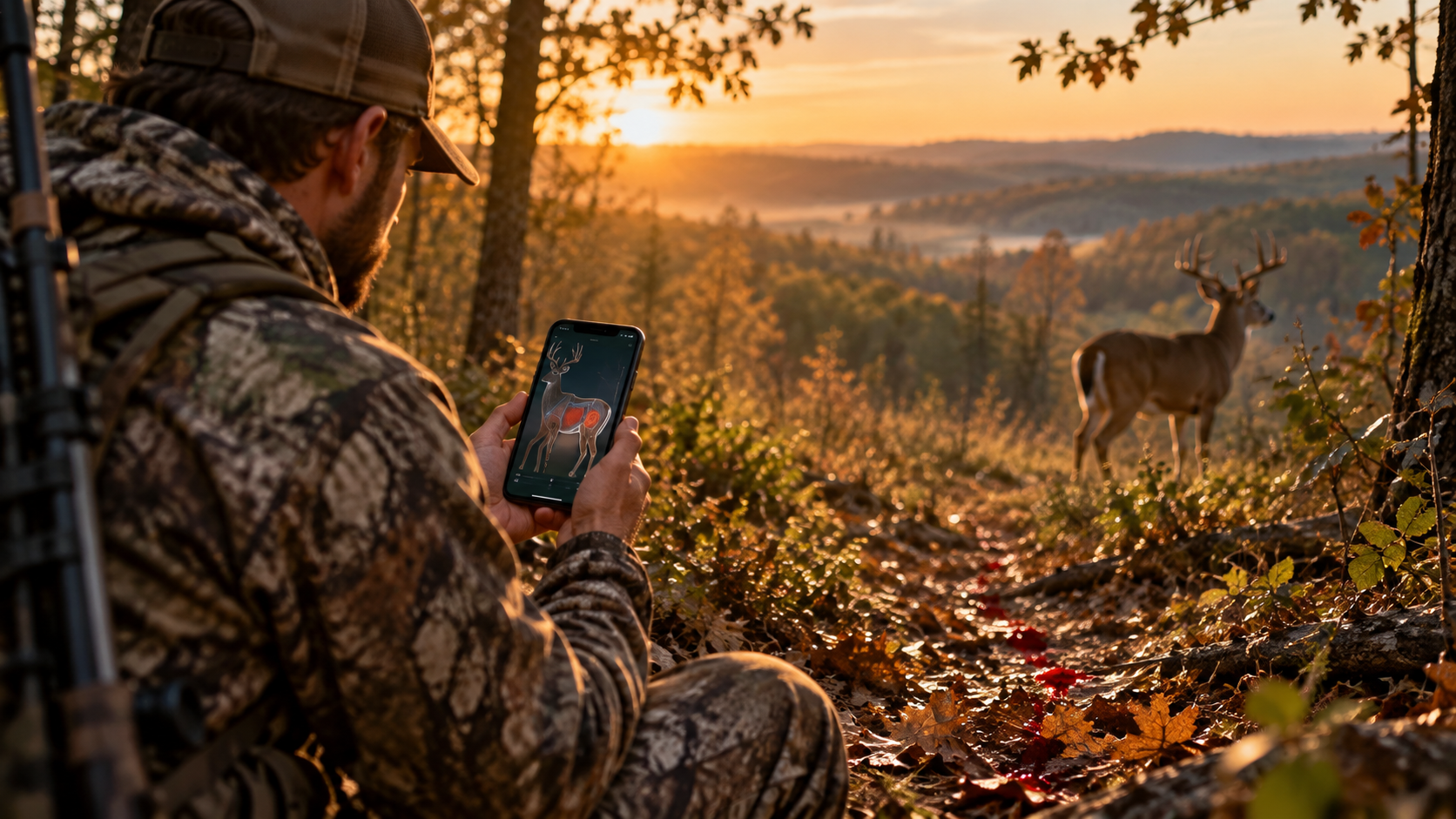
Making the shot is only the beginning of recovering a deer. What happens during the next few minutes can determine whether you recover that animal quickly, spend hours searching, or accidentally push a wounded deer farther away.
That is why HuntIQ includes a Shot Analyzer as part of its deer recovery system. It helps hunters think through shot placement, possible organ involvement, expected deer behavior, blood sign, and how long they should consider waiting before beginning the recovery.
Why Deer Shot Placement Matters
A deer can react very differently depending on where the arrow or bullet entered.
A heart or double-lung hit may produce heavy blood and a relatively short recovery. A liver hit may require considerably more patience. A marginal hit can produce very little visible blood and may require a slower, more deliberate search.
One of the biggest mistakes a hunter can make is assuming every deer should be followed immediately.
After the shot, pay attention to everything you can remember:
- Where the deer was standing
- The angle of the deer
- Where you believe the arrow or bullet entered
- How the deer reacted
- The direction it traveled
- Whether you heard it crash
- What the arrow looks like, if recovered
- The color, amount, and appearance of any blood
Those details can help determine your next move.
HuntIQ Shot Analyzer
HuntIQ’s Shot Analyzer allows the hunter to select the approximate location of the hit on a deer diagram.
Based on that location, HuntIQ provides guidance about the organs that may have been affected, what type of reaction or blood sign may be expected, and how long the hunter should consider waiting before following the deer.
The goal is not to replace hunter judgment. It is to give the hunter another tool for making a better recovery decision.
That can be especially valuable when adrenaline is high and the temptation is to immediately start following the deer.
What Different Blood Can Tell You
Blood sign can provide important clues about the hit.
Bright red blood may indicate different types of tissue depending on the location of the hit. Pink or frothy blood can be associated with a lung hit. Dark red or maroon blood can indicate deeper internal bleeding or possible liver involvement.
But hunters should never rely on blood color alone.
Shot angle, penetration, exit wounds, terrain, rain, vegetation, and the amount of blood reaching the ground can all affect what you see.
Sometimes the blood trail is obvious.
Sometimes it is nothing more than droplets the size of the head of a pin.
That is where HuntIQ’s Blood Tracker becomes another part of the recovery process.
Finding Blood That Is Difficult to See
HuntIQ’s Blood Tracker uses the phone camera to highlight colors associated with blood while the hunter searches.
It is designed to help hunters locate blood that may be difficult to notice with the naked eye, particularly tiny droplets hidden among leaves, pine needles, grass, bark, and other ground cover.
This can also be especially useful for red/green colorblind hunters who may have difficulty distinguishing blood from natural vegetation.
Once blood is located, the hunter can continue the recovery while using HuntIQ’s recovery and trail tools to help document the route.
Know When to Wait
One of the most important recovery decisions is knowing when not to follow immediately.
Pushing a wounded deer can turn a recoverable animal into a much more difficult tracking job.
If the shot appears questionable, mark the location where the deer was standing and the last place you saw it. Review what happened. Examine the arrow if one is available. Look at the first blood carefully.
Then make a deliberate decision instead of allowing excitement to dictate the recovery. For more on wait-time factors, see How Long to Wait After Shooting a Deer.
From Shot to Recovery
HuntIQ is not simply a mapping app.
It was built specifically around what happens after the shot.
Hunters can use HuntIQ to:
- Analyze the approximate hit location
- Estimate what organs may have been affected
- Review expected blood and deer behavior
- Determine an appropriate recovery strategy
- Use the Blood Tracker to help locate difficult-to-see blood
- Mark blood and important locations
- Follow and save the recovery route
- Retrace when necessary
- Contact a local tracker when the recovery requires additional help
The purpose is simple: give hunters better information and better tools during the part of the hunt when mistakes matter most.
If you have made the shot and are wondering what to do next, HuntIQ was built for that moment.
Track smarter. Recover more.
Visit HuntIQ.org to use HuntIQ and start your free trial.